

In Kyrgyzstan, IFRC Disaster Law together with the Red Crescent Society of Kyrgyzstan (RCSK) is providing technical legal advice to develop sectoral laws and bylaws to the International Disaster Response Law (IDRL) of 2017 to allow for its effective implementation at all levels. This work includes support in sharing of best practices on the importance of legal preparedness and effective mainstreaming of climate-smart disaster laws and policies that leave no one behind.
Under the DG ECHO PPP, IFRC and the RCSK have further collaborated with the Ministry of Emergency Situations of the Kyrgyz Republic (MoES) to conduct inter-ministerial simulation exercises (SimExes) in February and March 2025. These exercises tested the practical implementation of the Regulation on the Assistance Facilitation Group, which operates based on the single window principle, examined mechanisms for interaction and coordination to ensure effective and expeditious reception, registration, and transit of international emergency assistance across the state border.
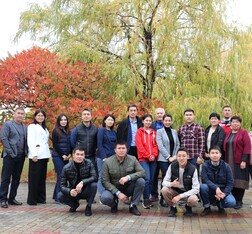
In May 2025, following the SimExes, the Ministry of Emergency Situations and the RCSK conducted a Lessons Learned Workshop with participation of key Government partners and members of the Disaster Response Coordination Unit (DRCU). The workshop provided an opportunity to discuss outcomes, evaluate effectiveness, identify challenges and gaps, and share insights to strengthen future initiatives. All recommendations from participants, including members of the DRCU and government agencies, were shared with the MoES for further consideration.
IFRC Disaster Law working with the National Secretariat of Disaster Risk Reduction and Disaster Response Coordination Unit (DRCU) in Kyrgyzstan. The program utilises local capacities of the Kyrgyzstan Red Crescent Society and the National Disaster Risk Reduction Platform, established by the government, and other stakeholders to raise awareness, build the capacity of government stakeholders, map relevant laws and regulations, provide technical advice, and conduct additional local research about climate-smart disaster laws and policies.