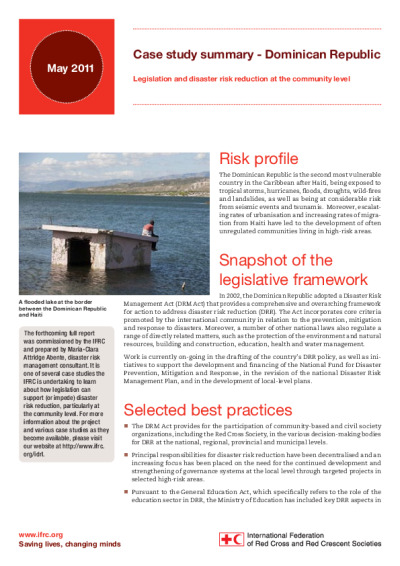


The Dominican Republic is the second most vulnerable country in the Caribbean after Haiti, being exposed to tropical storms, hurricanes, floods, droughts, wild-fires and landslides, as well as being at considerable risk from seismic events and tsunamis.
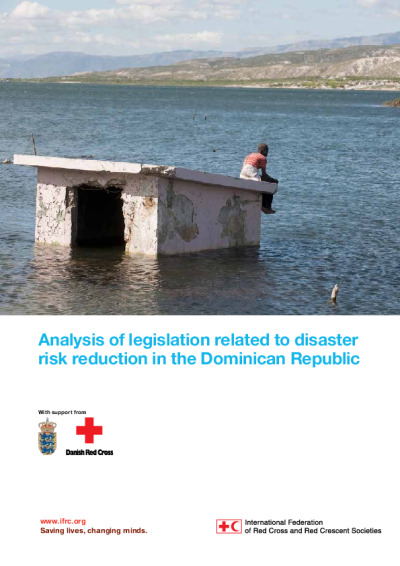
In 2011, IFRC Disaster Law published a study entitled Analysis of Legislation related to Disaster Risk Reduction in the Dominican Republic. The study was prepared following a desk review of applicable legislation and consultations with key stakeholders. It provided several recommendations for the strengthening of the legal and policy framework in Dominican Republic, including recommendations relating to funding, land-use, construction and environmental management.
Between 2019 and 2021, IFRC Disaster Law has worked with the Dominican Red Cross and The Nature Conservancy to advocate for the adoption of an International Disaster Response Law, and the incorporation of disaster risk reduction recommendations into the draft disaster risk management bill which is currently being developed by the government. Through this project was developed the “Synthesis Report on Legal Preparedness for International disaster relief”. Dominican Red Cross, as part of the National Emergency Commission, presented the Synthesis Report during a Commission assembly. Interest in the subject was generated among the members of the Technical Committee, promoting an on-site Legislative Advocacy Toolkit training for the authorities that formed the Dominican National Technical Committee for Risk Prevention and Mitigation. The training was facilitated by the Dominican Red Cross, TNC Resilient Islands Project and IFRC Disaster Law, and had the attendance of national authorities representatives (including the Public Health Ministry, National Geological Service, Interior and Policy Ministry, Agriculture Ministry, National Seismic Evaluation Office, Dominican Red Cross, among others). The outcomes included the presentation and review of the recommendations from the Synthesis Report on “Ecosystem-based adaptation in the framework of DRR and CCA policies”, a space to share legislative advocacy tools and the creation of a petit committee that will advocate for the recommendations of the Synthesis Report in the DRM Law revision.
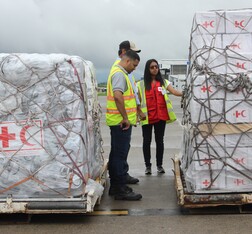
In 2021, IFRC Disaster Law provided legal support on the establishment of a humanitarian corridor designed to facilitate the shipment and transit of goods to and from neighbouring countries, especially Haiti. The project is a collaboration between Haiti Red Cross, the Dominican Red Cross, IFRC and the World Food Programme, with funding from the European Civil Protection and Humanitarian Aid Operations and the Belgian government.
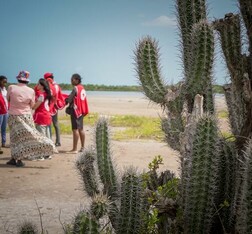
During 2021, Dominican Red Cross key actors were training on the Legislative Advocacy toolkit, three advocacy strategies were developed by the participants, considering the DRR scope in climate change, community engagement, and law and policy implementation.
In 2022, IFRC Disaster Law was invited to participated on the August Dominican Red Cross National Assembly, to share a session about humanitarian diplomacy and auxiliary role, been the first time the National Society invites and allows a unit from IFRC DCPRR department to participate in their internal national assembly.
A 2025 study on climate resilience law and regulations by the Dominican Republic Red Cross was conducted to analyze the legal and institutional framework for disaster risk governance through a climate resilience lens. The analysis covered a comprehensive body of national instruments — including the Constitution, the foundational Disaster Risk Management Law (Ley 147-02), territorial planning legislation, climate change policies, environmental regulations, and national emergency and adaptation plans — and was complemented by consultations with key national authorities spanning the Emergency Operations Center (COE), the National Meteorology Office (ONAMET), the Ministries of Environment and Economy, and the National Council for Climate Change. The Dominican Republic Red served as an essential partner throughout, contributing technical expertise through its Disaster Risk Management Directorate and its institutional presence within national coordination bodies including the National Prevention, Mitigation and Response Council, the Technical Committee, and the COE.
The study's recommendations — focused on strengthening inter-institutional coordination, updating national plans, formalizing the integrated early warning system, and diversifying climate finance mechanisms — provide a concrete advocacy roadmap that the Dominican Republic Red Cross and IFRC are well positioned to advance in partnership with national authorities.