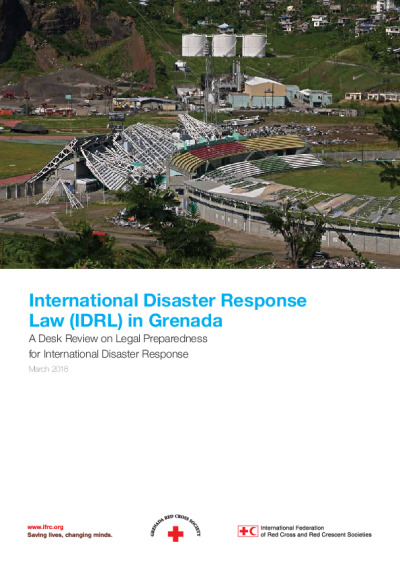


In 2018, IFRC Disaster Law and Grenada Red Cross Society published a report entitled International Disaster Response Law (IDRL) in Grenada, which is a desk review of legal preparedness for international disaster response in the country. The report concluded that the primary gap in the legislative environment in Grenada is the absence of a comprehensive disaster management law that would centrally locate the legal facilities required to regulate, guide and govern domestic and foreign disaster relief.
IFRC Disaster Law, Grenada Red Cross Society and The Nature Conservancy have a legal and policy advocacy initiative in place, focusing on disaster risk reduction and climate change, including ecosystem-based adaptation. As part of this project, in December 2020 the government approved the establishment of a technical committee of stakeholders to contribute to an analysis of Grenada’s legal and policy framework for disaster risk reduction and climate change.
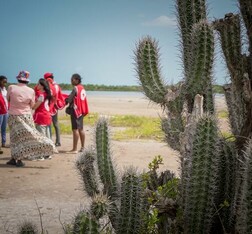
In 2025, the IFRC Disaster Law team supported the Grenada Red Cross Society to advance groundwork for ecosystem-based adaptation (EbA) advocacy under the Ecological Connectivity Community Resilience (ECCR) Project. Through a legal and policy assessment, opportunities and barriers for EbA were identified in the Woburn-Clarke's Court Bay Marine Protected Area as well as advocacy opportunities for strengthening the legal and policy framework for EbA. Consultations were held with a wide range of stakeholders including the Ministry of Climate Resilience, the Environment and Renewable Energy, the Grenada Tourism Authority, the Ports Authority, Grenada Sustainable Development Trust Fund and the Clarke's Court Boatyard and Marine among others. The National Society also built their capacity through legislative advocacy training conducted by the IFRC. Additionally, the Grenada Red Cross Society engaged in an outreach to the Woburn Community to assess their views on potential EbA interventions such as policy reform to better protect the mangroves in their community.